Designed for qualified Level 3 practitioners, this bridging qualification deepens clinical reasoning, critical thinking, and professional practice within an extended scope. The programme is endorsed by IRVAP (ICH) and NARCH.
What you’ll study
Clinical Risk Assessment, Health Monitoring & First Aid
Water Management & Sustainable Practice
Canine Functional Anatomy & Biomechanics
Clinical Reasoning & Assessment Processes
Advanced Techniques: Hydrotherapy Pool (and/or Aquatic Treadmill) for Canine Therapists
Outcomes
By completion supported by a placement in Poole you’ll have a robust, evidence-informed approach to assessment and treatment planning, and the confidence to design and deliver advanced, effective hydrotherapy programmes tailored to individual canine needs.
Gain the anatomical insight and hands-on skills to assess movement and plan effective hydrotherapy. You’ll cover:
Neurophysiology & proprioception: key peripheral nerves and postural control.
Muscle biomechanics: prime movers vs. stabilisers and the role of postural tone.
Fascia & lymphatics; cardio-respiratory: structure, function, and relevance to aquatic rehab.
Therapeutic palpation: locating major muscles, bony landmarks, and joints to identify movement disorders.
By the end, you’ll link anatomy to function and use skilled palpation to inform precise, evidence-based treatment.
Build the essentials for safe practice in water-based therapy. You’ll learn to:
Perform Clinical Risk Assessments (risk rating, controls, ethical duties).
Run comprehensive health checks, spot hazards, and manage precautions vs contraindications.
Monitor health and behaviour throughout sessions and act on changes.
Understand legal/professional responsibilities in emergencies.
Deliver first aid in-clinic: CPR, bandaging, and safe emergency evacuation.
Concise, practical, and focused on real-world hydrotherapy safety.
Learn to run hydrotherapy water systems safely, legally and efficiently.
Compliance: legal/professional duties for water safety.
Filtration & backwash: operate and maintain systems to keep water clear and clean.
Chemicals & testing: safe dosing, routine test protocols, interpreting results, corrective actions.
Biosecurity & hygiene: cleaning schedules, infection control, documented SOPs.
Plant operations: hands-on maintenance and daily checks.
Sustainable practice: energy/water efficiency and eco-smart equipment choices.
By the end, you’ll confidently manage water quality, uphold biosecurity, and run a sustainable, efficient facility.
Build a clear, clinically reasoned approach to assessment and treatment.
Assessment structure: thorough subjective history and objective exam (observation, palpation, ROM, gait, pain/behaviour cues).
SMART goals: set meaningful, measurable targets with owners/handlers.
Clinical reasoning: choose safe, effective techniques; manage precautions vs contraindications; adapt in real time.
Re-assessment & outcomes: use valid, reliable measures; track progress and adjust plans.
Communication & MDT: concise reports, informed consent, collaborative working, and strategies for difficult conversations.
Outcome: Confident, evidence-informed assessment leading to targeted, safe hydrotherapy care.
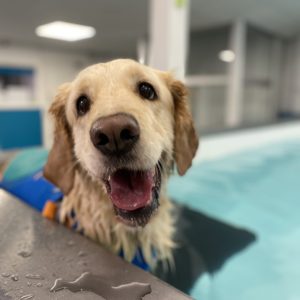
Refine pool-based hydrotherapy to deliver safe, targeted outcomes.
Clinical decision-making: apply assessment, behaviour, anatomy, breed traits and pathology to select the right aquatic techniques.
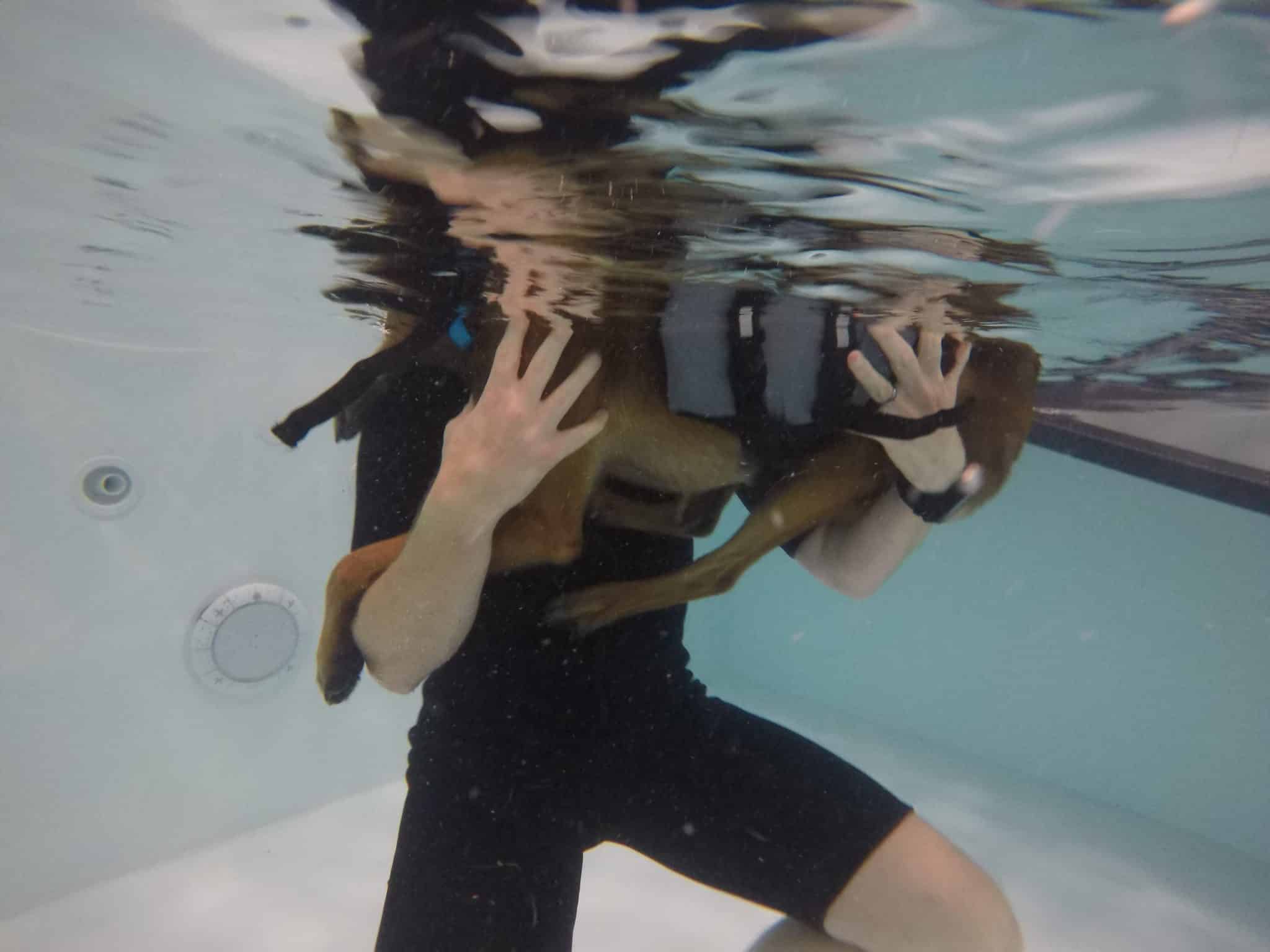
Session setup & safety: therapeutic preparation, equipment checks, controlled entry/exit, and continuous health monitoring.
Techniques: manual therapy (in-water where appropriate), movement shaping, and therapeutic exercises to improve mobility and muscle function.
Review & progression: aftercare guidance, evaluating effectiveness, and adjusting plans to the dog’s real-time response and ongoing progress.
Outcome: Confident, customised pool treatments tailored to each canine’s needs.
Turn classroom learning into confident clinical practice with a hands-on placement at Pawseidon, Poole. Under the guidance of our highly qualified hydrotherapy team, you’ll work with real canine cases and receive personalised feedback throughout.
What you’ll develop
Professional practice
Client communication, consent and welfare-first handling
Multidisciplinary teamwork and clear, professional documentation (clinical note-taking, handovers)
Pre-session health checks, Clinical Risk Assessment (CRA) and emergency first aid (CPR, bandaging)
Technical & clinical skills
Therapeutic palpation and MSK assessment: locating bony landmarks, key muscles and joint lines; recognising movement disorders
Therapeutic handling, behaviour management in water, and enrichment to boost engagement
Condition-led planning: ortho, muscular and neurological presentations; building tailored rehab and performance programmes
Hydrotherapy practice
Pool-based treatments: safe equipment handling, controlled entry/exit, continuous health monitoring and in-session adjustments
Post-session aftercare, owner guidance and progression/regression based on response
Water management & biosecurity: water quality testing, filtration/backwash routines, hygiene protocols
Why Pawseidon
Expert trainers & assessors: years of clinical hydrotherapy experience, live demos and guided learning
Individualised feedback: practical coaching to strengthen technique and clinical decision-making
Real-world readiness: leave confident, competent and aligned to best practice for safe, effective treatments across diverse canine clients.
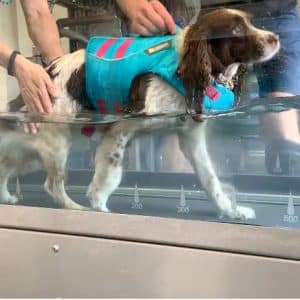
Canine hydrotherapy uses controlled, water-based exercise to support rehabilitation and performance especially for musculoskeletal and neurological conditions. Working in a hydrotherapy pool or aquatic treadmill, therapists harness buoyancy and resistance to build strength, improve joint mobility, and reduce pain, while minimising impact. Effective practice draws on functional anatomy, biomechanics and pathology, plus an appreciation of breed biology and individual health needs to tailor treatment safely.
Professional Practice & Responsibilities
Beyond clinical technique, great outcomes rely on calm, skilled handling, clear communication, and an enriched, low-stress environment. Practitioners work within ethical and legal frameworks, maintain high professional standards, and collaborate across the multidisciplinary team. Training equips learners to:
conduct thorough assessments and ongoing health monitoring,
select and dose appropriate pool/treadmill techniques,
provide owner education and structured aftercare.
The result is personalised, evidence-informed care that supports each dog’s mobility, comfort, and overall quality of life.