GA Level 4 Award in Advanced Aquatic Treadmill Therapies
Overview
A specialist qualification for practising canine hydrotherapists who want to deepen their treadmill expertise. Gain advanced clinical knowledge and hands-on skills to optimise outcomes across musculoskeletal, neurological and degenerative conditions.
What you’ll learn
Clinical reasoning & assessment: case profiling, goal setting, and outcome tracking to justify every parameter choice.
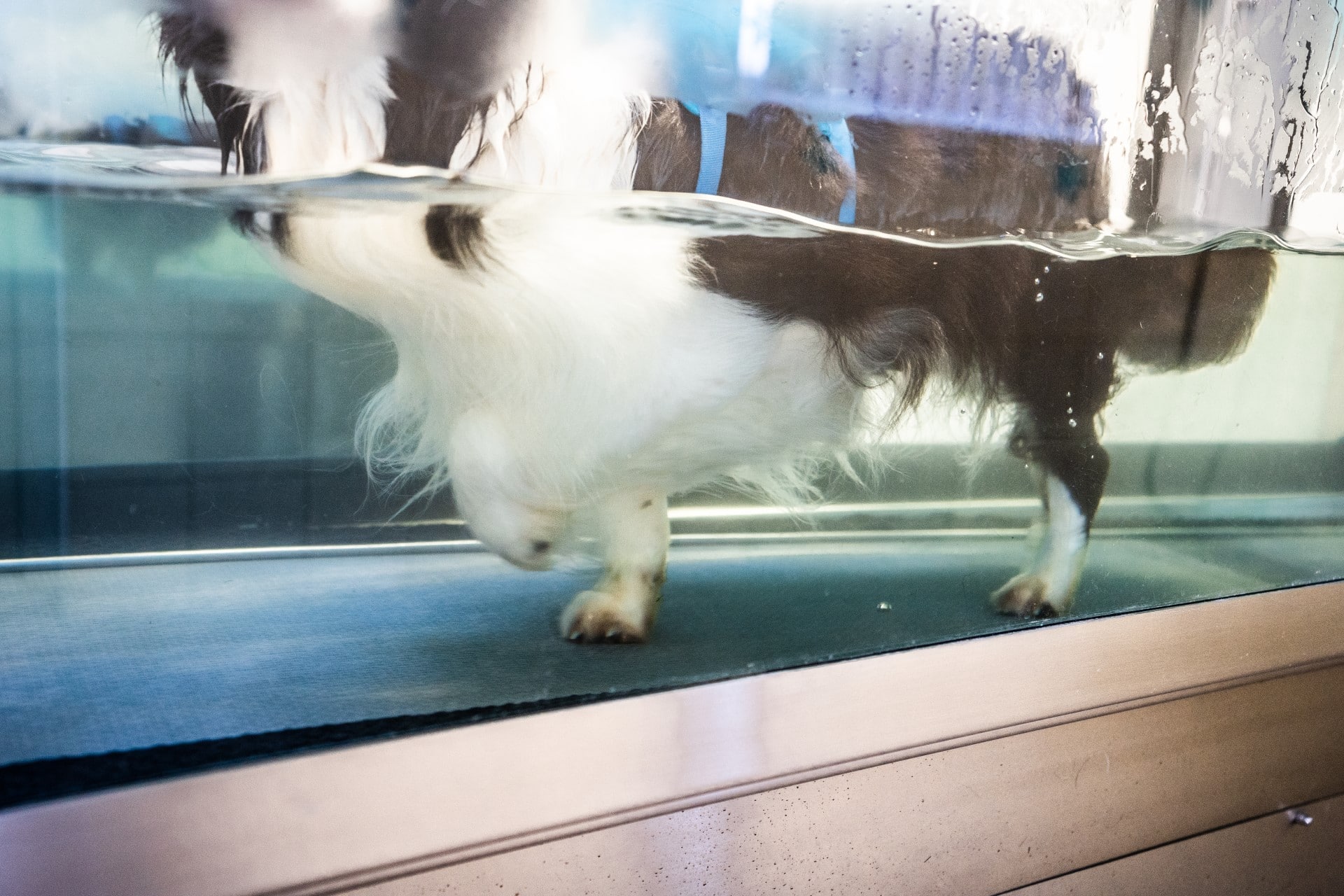
Advanced treadmill techniques: precise manipulation of water height, incline, speed, and resistance to target strength, gait, proprioception, and range of motion.
Therapeutic exercise & movement shaping: protocols that enhance muscle recruitment, joint mobility, balance and coordination.
Condition-specific programming: orthopaedic, neurological, post-surgical and performance conditioning pathways, including progressions/regressions.
Safety & professionalism: risk management, indications/contraindications, informed consent, ethical practice, legal compliance, record-keeping and audit-ready documentation.
Outcomes
Confidently design and deliver evidence-informed, individualised aquatic treadmill programmes, adjust parameters in real time, and document clear clinical rationales that improve recovery, performance, and long-term function.

Build a clear, evidence-informed approach to assessing dogs and planning safe, effective hydrotherapy.
You’ll learn to:
Structure an assessment: take a thorough subjective history and perform an objective exam (observation, palpation, ROM, gait, pain/behaviour cues).
Set SMART goals: agree meaningful, measurable targets that drive your treatment plan.
Apply clinical reasoning: choose appropriate techniques, manage precautions vs contraindications, and adapt sessions in real time.
Re-assess & measure outcomes: use valid, reliable tools; establish baselines; track progress; and adjust or escalate when needed.
Communicate professionally: explain findings clearly, obtain informed consent, write concise notes/reports, and work effectively with owners and the MDT—including handling difficult conversations.
Outcome: Confident, systematic assessments that justify your treatment choices and deliver safe, measurable progress for each dog.
Refine high-level treadmill practice for complex ortho/neuro cases and performance conditioning.
You’ll learn to:
Integrate assessment to action: use behaviour, functional anatomy, breed traits and pathology to choose the right treadmill strategy.
Run precise sessions: therapeutic prep, safe equipment operation, controlled entry/exit, and continuous health monitoring.
Apply advanced techniques:
Proprioceptive work: stride placement, cadence changes, perturbations, dual-tasking.
Movement shaping: targeting/luring, stance and step-width adjustments, therapist positioning.
Therapeutic exercise & adjuncts: dosing speed, depth, incline, intervals; appropriate use of manual therapy.
Review & adapt: outcome-led progressions/regressions, clear stop/progress criteria, and tailored aftercare/home exercise.
Outcome: Confidently design and deliver evidence-informed, individualised treadmill programmes—and adjust parameters in real time to optimise mobility, strength and functional performance.
Practical Training — 3 Full Days, Poole (Dorset)
Gain real-world experience alongside our industry experts. Over three intensive days you’ll:
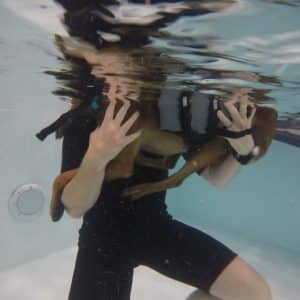
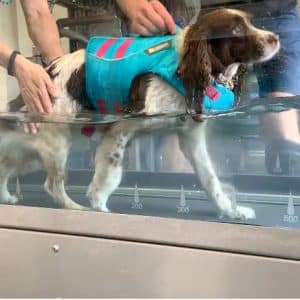
Work hands-on with real canine patients across a range of conditions.
Put theory into practice with guided coaching and live demonstrations.
Build confidence through supervised skills practice and feedback.
A formal practical skills assessment follows to validate your competence.
Advanced Aquatic Treadmill Therapy For Qualified Hydrotherapists
Who it’s for: Practising canine hydrotherapists ready to advance their treadmill expertise with deep theory and intensive, hands-on training.
What you’ll learn
-
Clinical reasoning in real time: assess gait, muscle recruitment and joint mechanics; link findings to parameter choices.
-
Advanced techniques: controlled speed and cadence changes, incline/decline, resistance work, and proprioceptive drills to target strength, ROM and gait quality.
-
Case-based programming: tailor protocols for post-surgical rehab, neurological presentations, mobility impairments and performance conditioning—factoring biomechanics, pathology and behaviour.
Safety & operations
-
Risk management: CRA, indications/contraindications, stop/progress criteria, and decision-making under pressure.
-
Professional practice: sustainability, equipment care/maintenance, legal compliance and robust documentation.
Outcome
Deliver precise, outcome-driven treadmill therapy with confidence—optimising mobility, strength and overall wellbeing for diverse canine clients.